
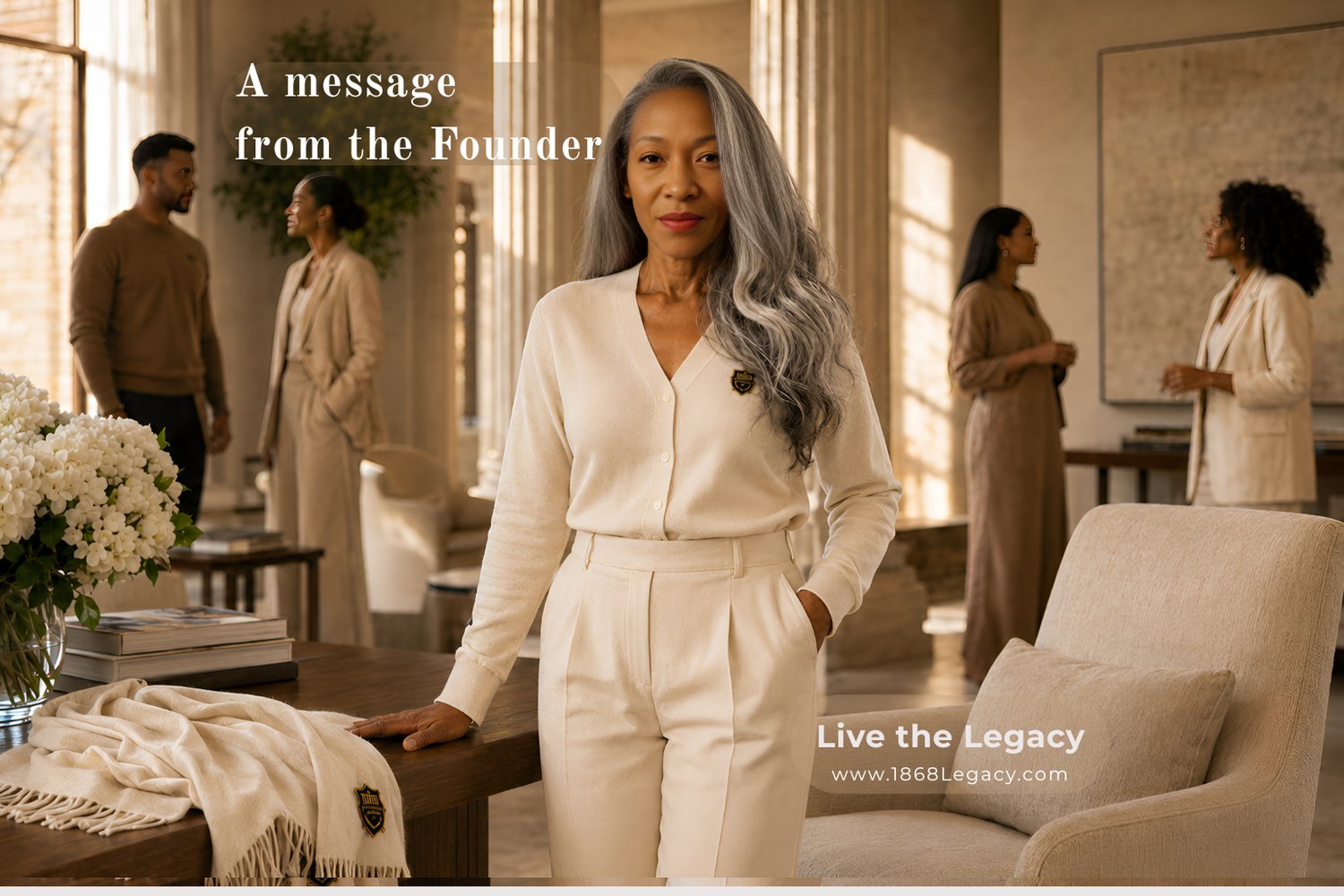
Reverse engineering belonging, leadership, and legacy
I started 1868 Legacy as a pivot from traditional DEI. Not because the work no longer matters.
Because the work matters too much to remain housed in structures that have become fragile.
Across organizations, DEI departments, culture teams, human capital leaders, consultants, and practitioners are navigating a season of change. Language is shifting. Roles are being reconsidered. Programs are being renamed. Budgets are being reduced. Some structures are being dismantled altogether.
For many who have carried this work for years, the question is no longer simply how to understand identity.
The deeper question is: What is the value we must preserve?
As someone who has been doing this work since 1996, I have been asking that question deeply — not only for organizations, but for myself. Much of what we built was meaningful. Some of it was working.
But the house had become fragile. It was too easy to dismantle, rename, defund, politicize, or remove from the center of organizational life.
So I began asking myself: What is next?
And perhaps more personally: How do I continue?
For years, my work often started at the top of organizations — with leaders, organizational structures, internal systems, culture, and strategy — in an effort to shape how people are seen, supported, developed, and treated. That work still matters.
But I began to deconstruct my own process. What if the starting point was not only the institution?
What if we started with the person?
What if we reverse engineered the work and helped people build their own systems of health, wealth, prosperity, leadership, belonging, and legacy — allowing that strength to extend outward into families, communities, organizations, and institutions?
That question became the beginning of 1868 Legacy.
Why 1868?
For me, 1868 is a point in time.
Hampton University, my alma mater, was founded in 1868. Over generations, Hampton alumni have created something powerful: an ecosystem of shared values, shared history, shared journey, pride, and belonging.
But Hampton is part of a much larger legacy.
Since 1837, with the founding of Cheyney University, historically Black colleges and universities have created ecosystems rooted in shared experience, cultural memory, excellence, resilience, leadership, and community. Across generations, HBCU alumni have carried more than a degree. They have carried identity, responsibility, relationship, and legacy. Much of that happens organically. People recognize one another. They build relationships, open doors, protect memory, and extend the meaning of the institution far beyond the physical campus.
That made me ask another question: What would it look like to create an ecosystem like that intentionally — one rooted in shared vision, growth, belonging, legacy, and forward movement?
But 1868 holds another meaning, too.
It was a pivotal moment in this country’s Reconstruction story. The 14th Amendment was ratified in 1868, expanding the constitutional meaning of citizenship and belonging after slavery. To me, that matters.
The idea of belonging is not just organizational language. It is cultural. It is historical. It is human.
Wherever you are, whoever you are, don’t we all want to belong? 1868 Legacy is rooted in that shared ideal — belonging, growth, elevation, and the responsibility to build what comes next.
Building Legacy From a Different Starting Point
1868 Legacy became about viewing belonging from a different starting point. Not the organization, but the individual. I won't get into the psychology of inclusion, that is another article. But belonging should begin with the person — identity, health, wealth, leadership, relationships, memory, and future.
From there, legacy extends into families, communities, organizations, and institutions.
This is not abandoning the work of inclusion. It is reverse engineering the concept and giving it a more durable architecture. For years, many of us tried to influence systems so people could thrive inside them. That still matters. But 1868 Legacy also asks what happens when we help people build their own systems — systems of confidence, wellness, prosperity, belonging, leadership, and legacy.
When we begin with the individual, we can help people strengthen their own foundations and then enter rooms, relationships, communities, and institutions with greater clarity and intention.
The work still matters. The architecture begins with the person.
The 1868 Legacy Ecosystem
That is how the 1868 Legacy ecosystem began to take shape. It is being built through connected expressions: the Collection, the Community, the Legacy Salons, the Legacy Circle, and the Legacy Collective.
Each part of the ecosystem one offers a different point of entry, but they all serve the same purpose: helping people build, grow, and carry legacy forward.
The Collection: A Visible Expression of Belonging
The 1868 Legacy Collection is rooted in our shared and individual heritage of identity and belonging.
The year 1868 is more than a date. It is a point in time that recognizes constitutional belonging through the ratification of the 14th Amendment, the legacy of education through institutions that set the ground work for generations and the ongoing responsibility to carry history forward with intention.
This kind of shared identity is not limited to HBCUs. Even within predominantly white institutions, communities often form through Black alumni associations, Hispanic and Latino alumni groups, women’s networks, and other affinity spaces where people gather around shared experience, identity, belonging, and aspiration.
The Collection gives that meaning a visible form. When people belong to something bigger than themselves, they often make that belonging visible. They wear the sweatshirt, carry the tote, place the sticker on the car, display the license plate frame, and declare identity, pride, affiliation, and shared values through what they choose to carry and wear.
That is how the 1868 Legacy Collection was born. The Collection is a visible expression of legacy — a way to say, I stand for heritage, belonging, growth, history, and what we are building next.
In my opinion, we should all stand for something. When you secure a piece you become part of The 1868 Legacy Community.
Legacy Salons: Better Rooms for Deeper Dialogue
The next pillar of the ecosystem is Legacy Salons.
Historically, a salon was a cultural or intellectual gathering, often hosted in a private residence, where people came together for conversation, ideas, and exchange. I am reimagining that concept for this moment because, honestly, who is not tired of the typical conference setting?
Legacy Salons are curated virtual and in-person rooms. We create high-touch, high-value, high-trust environments designed for meaningful dialogue, growth, reflection, and leadership around individual and community topics — including health, wealth, legacy, professional growth, personal growth, family, culture, and community.
These are thoughtful rooms. Strategic rooms. Working rooms. Rooms where trusted voices can examine what is changing, what matters, what we are carrying, and what we are building next.
The salon is the backdrop. The people in the room are the Legacy Circle.
Join our June 4th Virtual Salon: Leading Through Deconstruction: Legacy, Power & Reconstruction.
To learn more or reserve your seat, visit 1868Legacy.com.
Registration opens soon for In-person Legacy Salons to be held in Washington, DC and New York in June and July 2026.
The Legacy Collective: If You Want to Go Far
The last pillar — and final connector — of the 1868 Legacy ecosystem is The Legacy Collective.
There is a proverb many of us know: If you want to go fast, go alone. If you want to go far, go together.
That idea sits at the heart of The Legacy Collective.
Years ago, I met a dear Cameroonian friend in Vienna, Austria, who introduced me to two concepts that continue to shape how I think about community, leadership, and belonging: Ubuntu and Kgotla.
Ubuntu is often understood as, “I am because we are.” It is a philosophy rooted in our shared humanity — the idea that who we are is connected to the people around us, and that our well-being is tied to the well-being of the collective.
Kgotla is a traditional community gathering space — a place for dialogue, listening, counsel, and shared decision-making. What has always moved me about the concept is the respect for voice: people come together, speak, listen, and work toward understanding.
Those ideas feel deeply aligned with 1868 Legacy because legacy is not only personal. It is relational, communal, cultural, and built in conversation with others.
The question that led me here was simple: how do I engage the network I have built over time?
As an international speaker, award-winning leader, strategist, and convener, I have spent decades building relationships across corporations, communities, institutions, and leadership spaces. My network includes former clients, colleagues, executives, practitioners, founders, educators, civic leaders, and organizations that care about identity, belonging, culture, growth, and creating conditions where people can thrive in their careers, communities, and lives.
The Legacy Collective is for individuals and organizations that want to help sustain the work, expand the room, and extend the legacy. Yes, there are traditional elements of partnership: contribution, visibility, recognition, and alignment. But the deeper goal is not simply logo placement. The deeper goal is to bring people to the table.
We need CEOs, founders, executives, practitioners, wealth experts, health experts, cultural leaders, and community voices in the room. We want organizations to be part of a high-touch, high-trust network where knowledge, experience, relationships, and influence can be shared with intention. The Collective creates a way for individuals and organizations to support the ecosystem while also helping shape the conversations that matter.
Why Enter the 1868 Legacy Ecosystem?
I asked myself another question: why would someone want to become part of the 1868 Legacy ecosystem?
The honest answer is simple. Because it is something I would want to be part of.
As we grow, build, lead, and move through different seasons of life, many of us are looking for trusted rooms. We are looking for mentors, advisors, and people who can help us think through decisions, opportunities, health, wealth, family, leadership, purpose, and what we are building next.
Too often, we are searching alone — online, through AI, and through fragmented answers — trying to solve complex life and leadership questions without the benefit of trusted community, shared wisdom, or people who understand the journey.
But what if we did not have to build alone? What if we could share expertise, grow together, support our communities, and create both individual and shared legacy?
1868 Legacy is that space where people can bring their lived experience, expertise, questions, aspirations, and responsibility into the room. A place where we can grow as individuals and still remember that we are connected. A place where we can build personal legacy and shared legacy.
Your Invitation to Enter the 1868 Legacy Ecosystem
Choose Your Entry Point:
The 1868 Legacy Community — support the Collection as a visible expression of legacy, identity, belonging, and shared values.
The Legacy Circle — enter the rooms through Legacy Salons designed for dialogue, growth, leadership, and connection.
The Legacy Collective — join the Partners and Stewards supporting and shaping the rooms where the work continues.
Live the Legacy.
— Sherry Snipes
Founder, 1868 Legacy
Comments ()